

NGO Communications Revitalisation Plan
For Painted Dog Conservation Inc
*This is a sample end-to-end communications overhaul designed to strengthen visibility, funding support, and stakeholder engagement for a real-world conservation NGO.
This Communications Strategy, or Revitalisation Plan as I call it, has been developed as a holistic strategy to strengthen Painted Dog Conservation Inc's brand presence, enhance organisational credibility, and increase opportunities for donor engagement, sponsorship and strategic partnerships.
Purpose of this Revitalisation plan
The proposed strategy delivers improvements in two phases, across multiple communication channels including,
· A professionally designed annual report,
· Enhanced social media strategy,
· Website refresh,
· Quarterly newsletters,
· Targeted media outreach.
Together, these recommendations create a cohesive communications network that strengthens stakeholder engagement and better showcases the organisation's conservation impact.
Organisation brief: Painted Dog Conservation Inc
Painted Dog Conservation Inc was selected due to a common not-for-profit challenge: strong mission intent, but limited communications infrastructure to support visibility and stakeholder engagement.
An initial review of its public-facing platforms highlights gaps in its communications network. Social media is limited, with low engagement and inconsistent content, reducing audience reach and connection. There is no LinkedIn presence, missing an opportunity to build professional credibility within funding and partnership networks.
The website is largely static, with limited visual cohesion and outdated user experience, affecting clarity and engagement. Financial reporting is only available through external registry documents, limiting accessibility and impact-led storytelling.
The Subject of focus
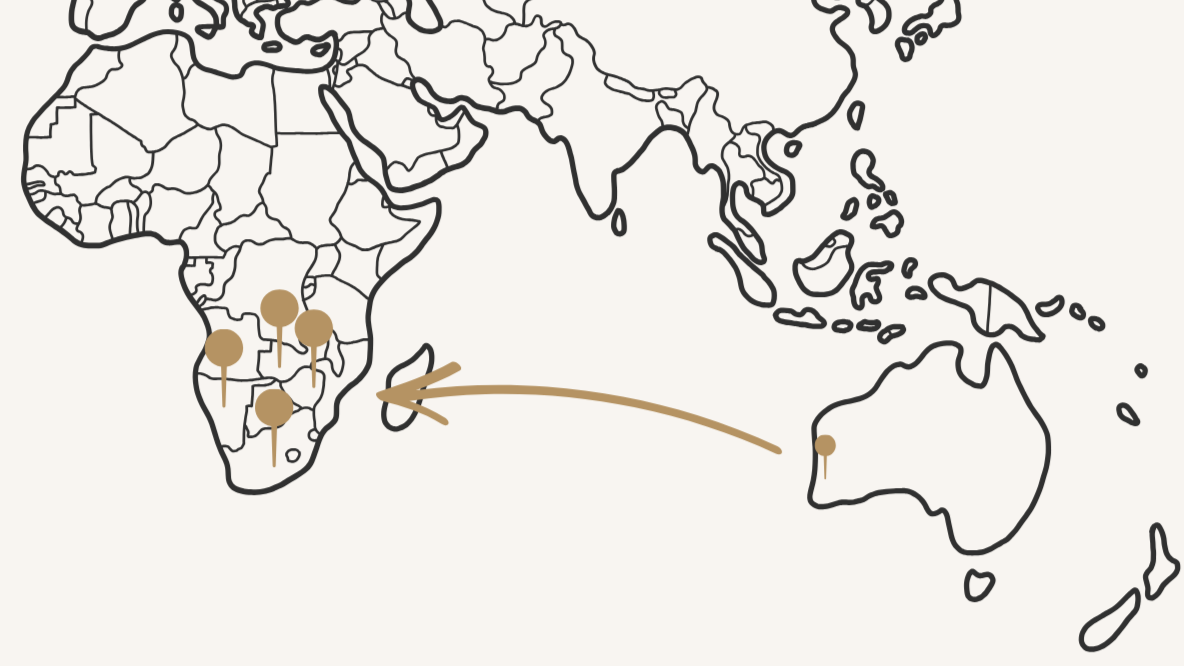
Painted Dog Conservation Inc supports conservation initiatives across multiple countries in Africa, working through on-the-ground partners to deliver protection, research, and community engagement outcomes. Funds raised in Australia have the potential to extend significantly further due to differences in operating costs, enabling greater on-ground impact across conservation programs.
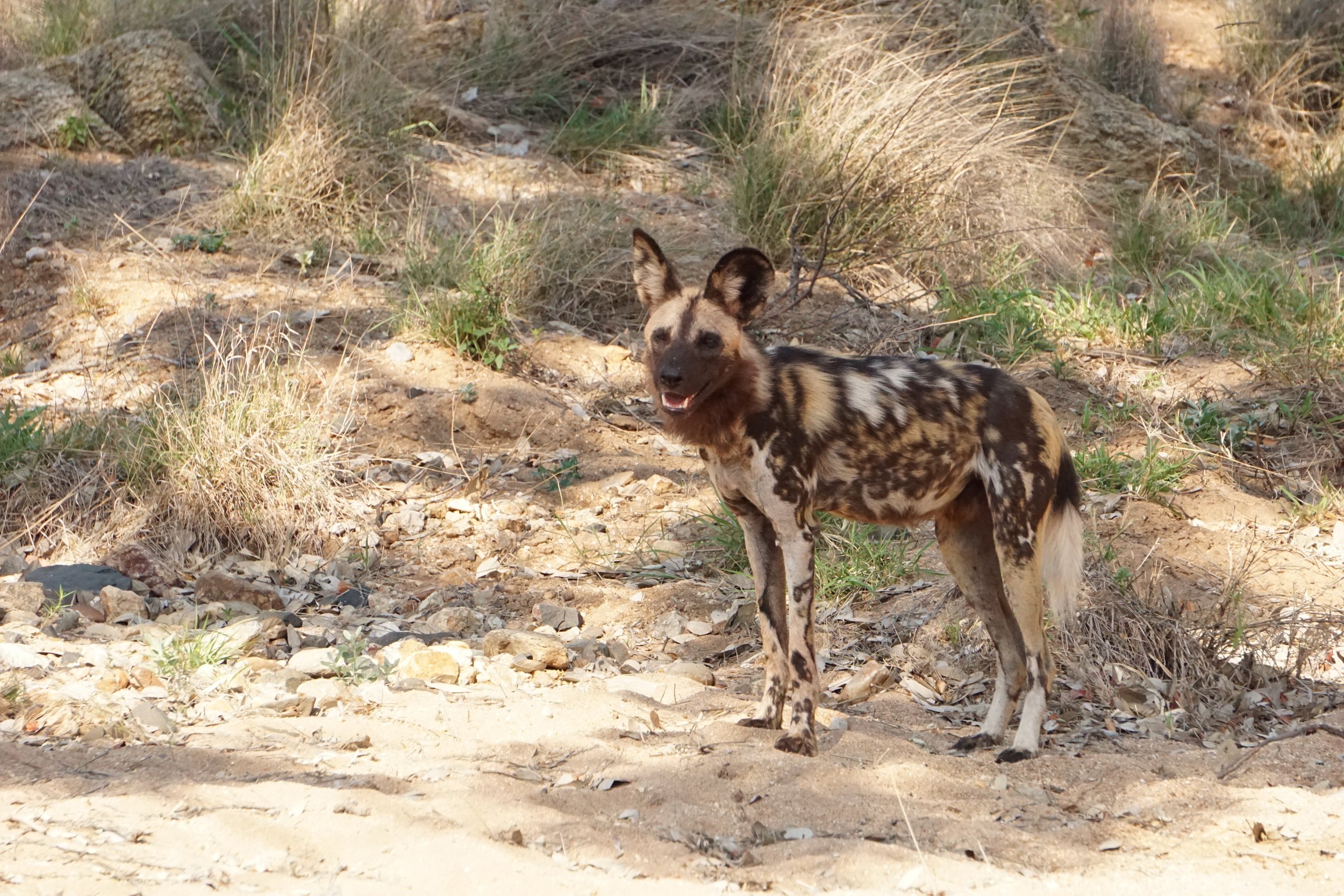
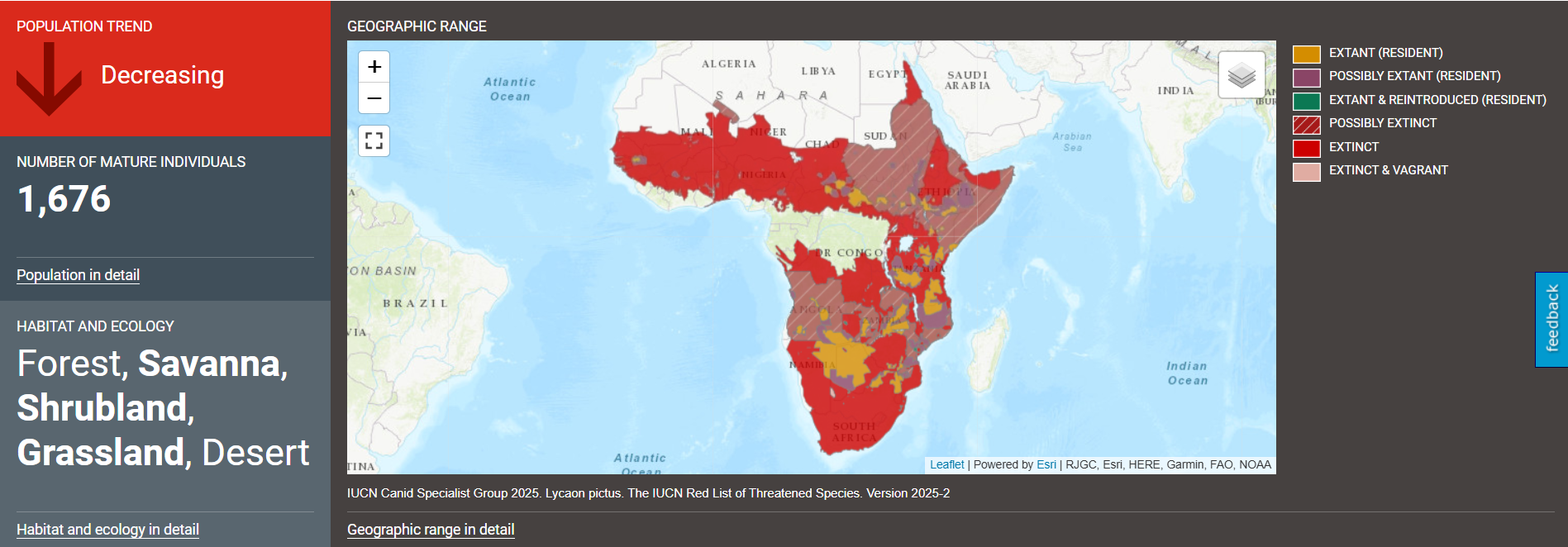
Lycaon pictus, known by the terms Painted Dog, Painted Wolf, African Wild Dog, and Cape Hunting Dog, are one of the most endangered large carnivores in Africa. Listed as Endangered by the International Union for the Conservation of Nature (IUCN). They face threats from human activity and habitat loss.
7 Key Recommendations
1. Annual Report
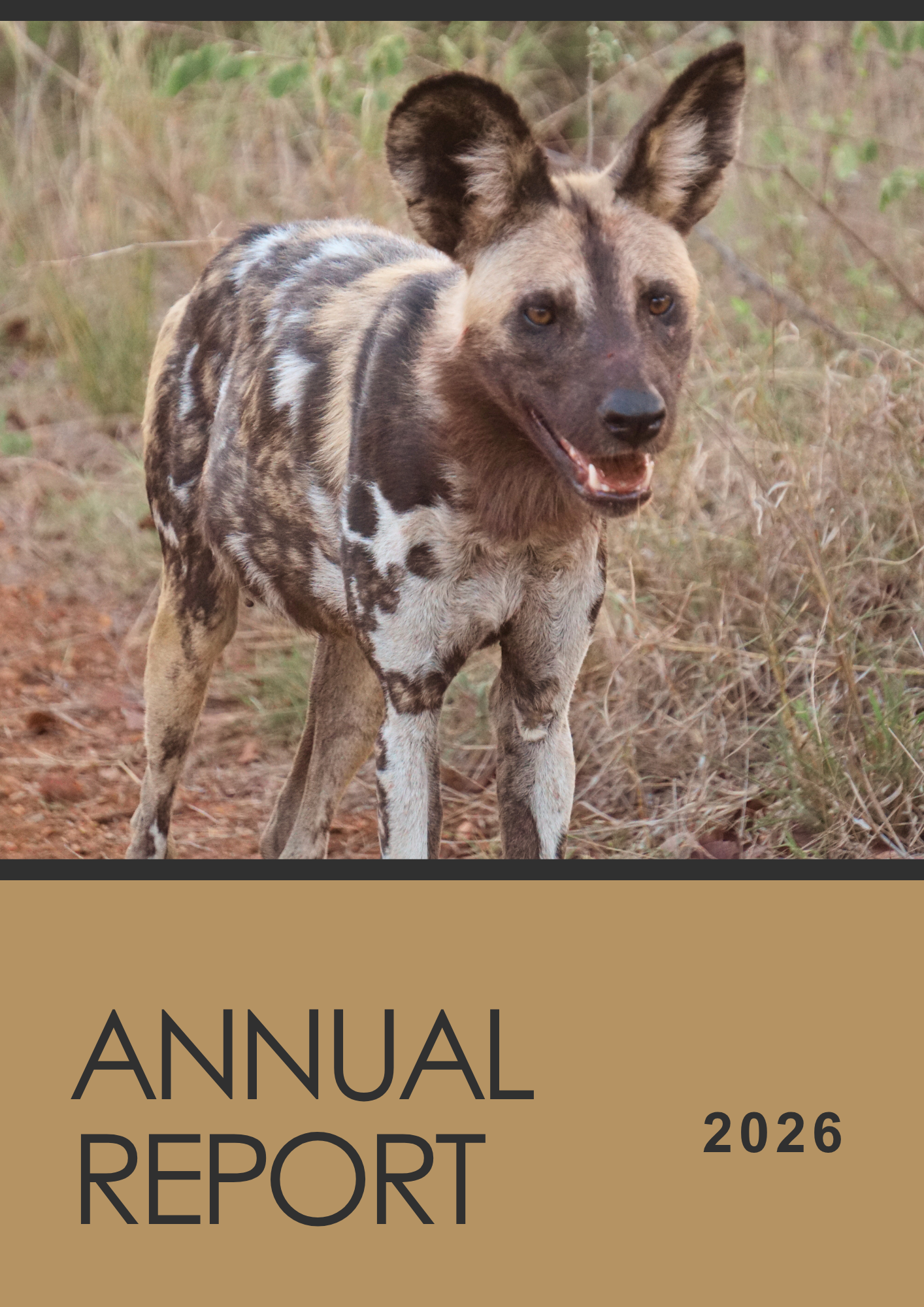
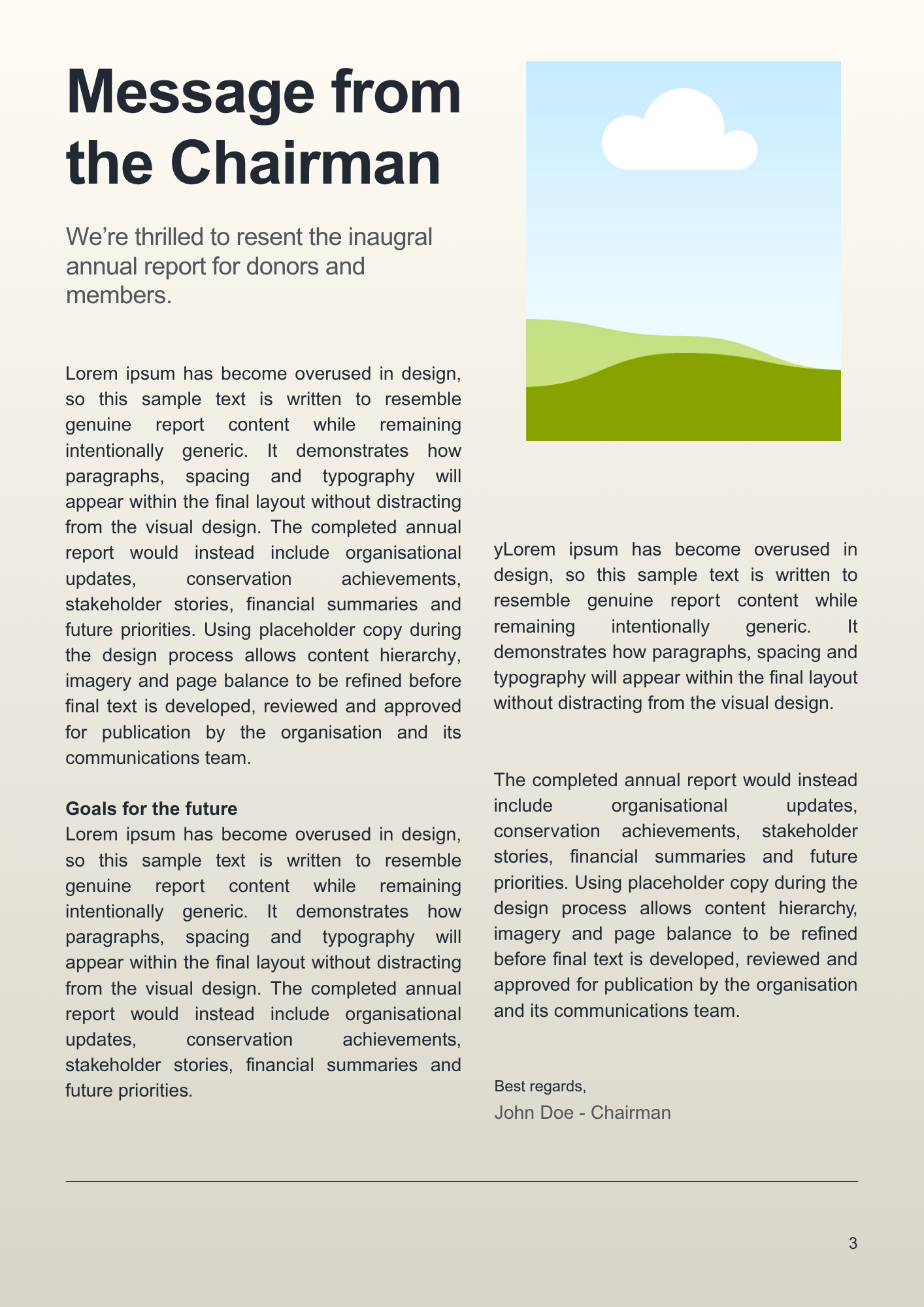
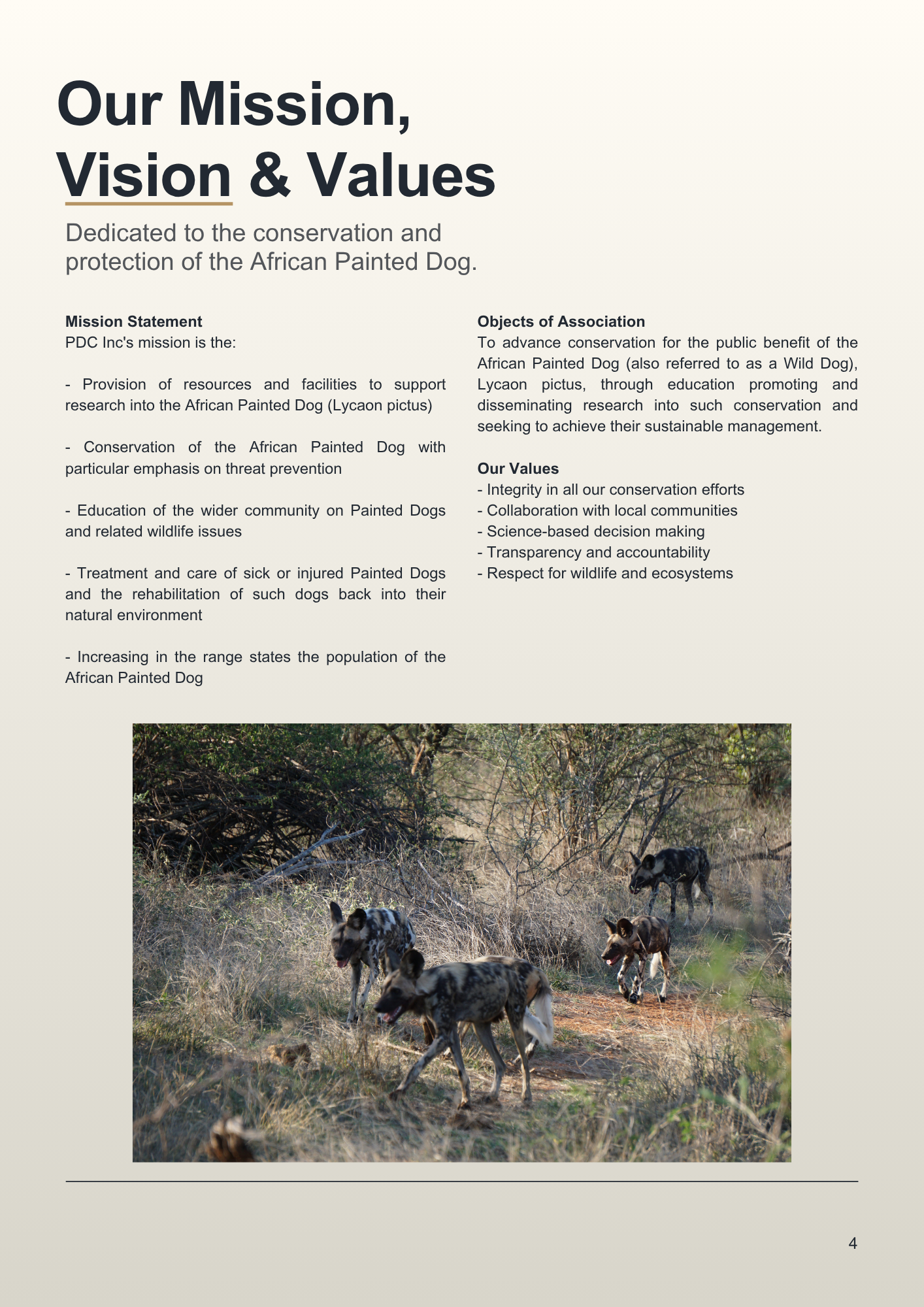
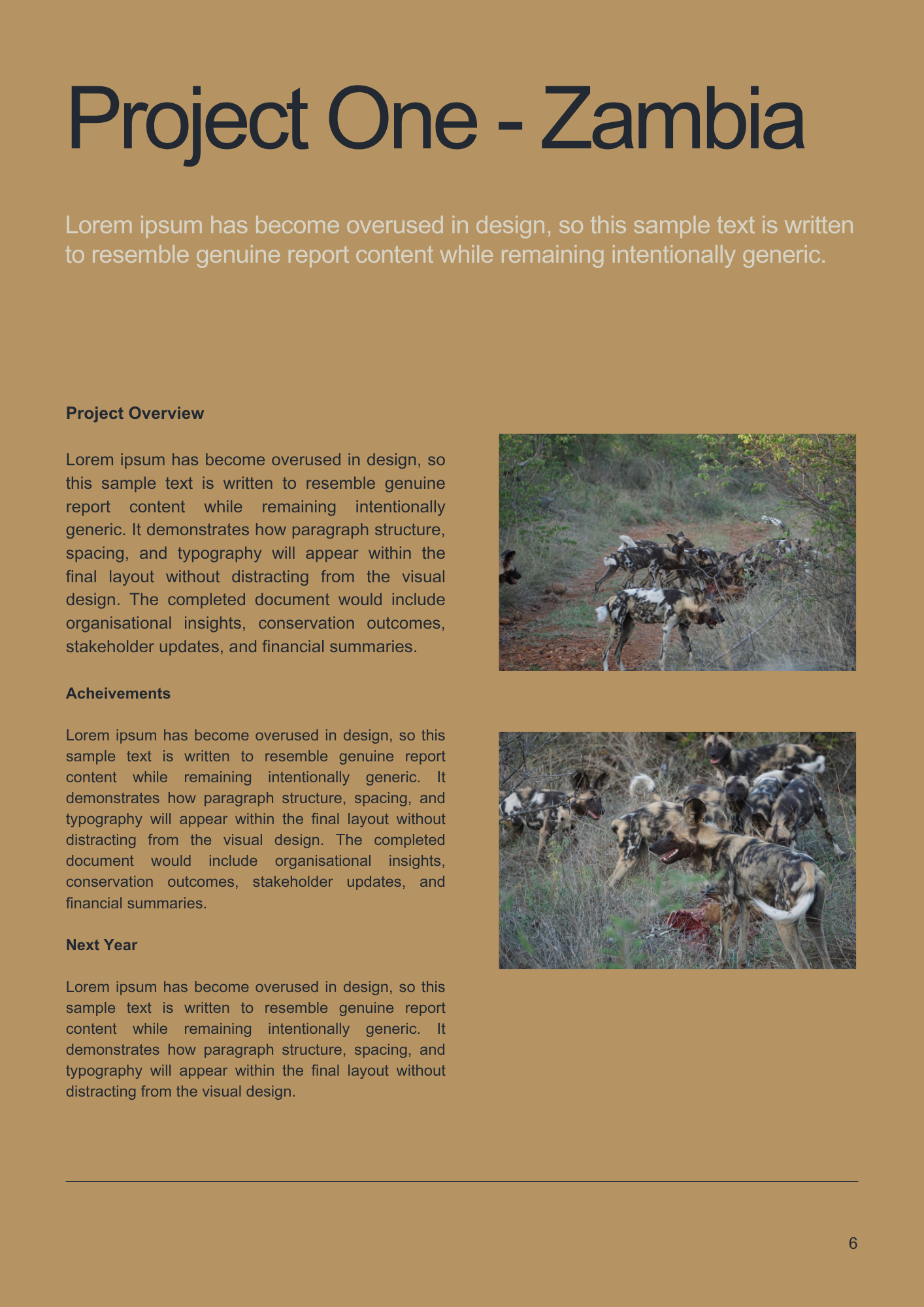
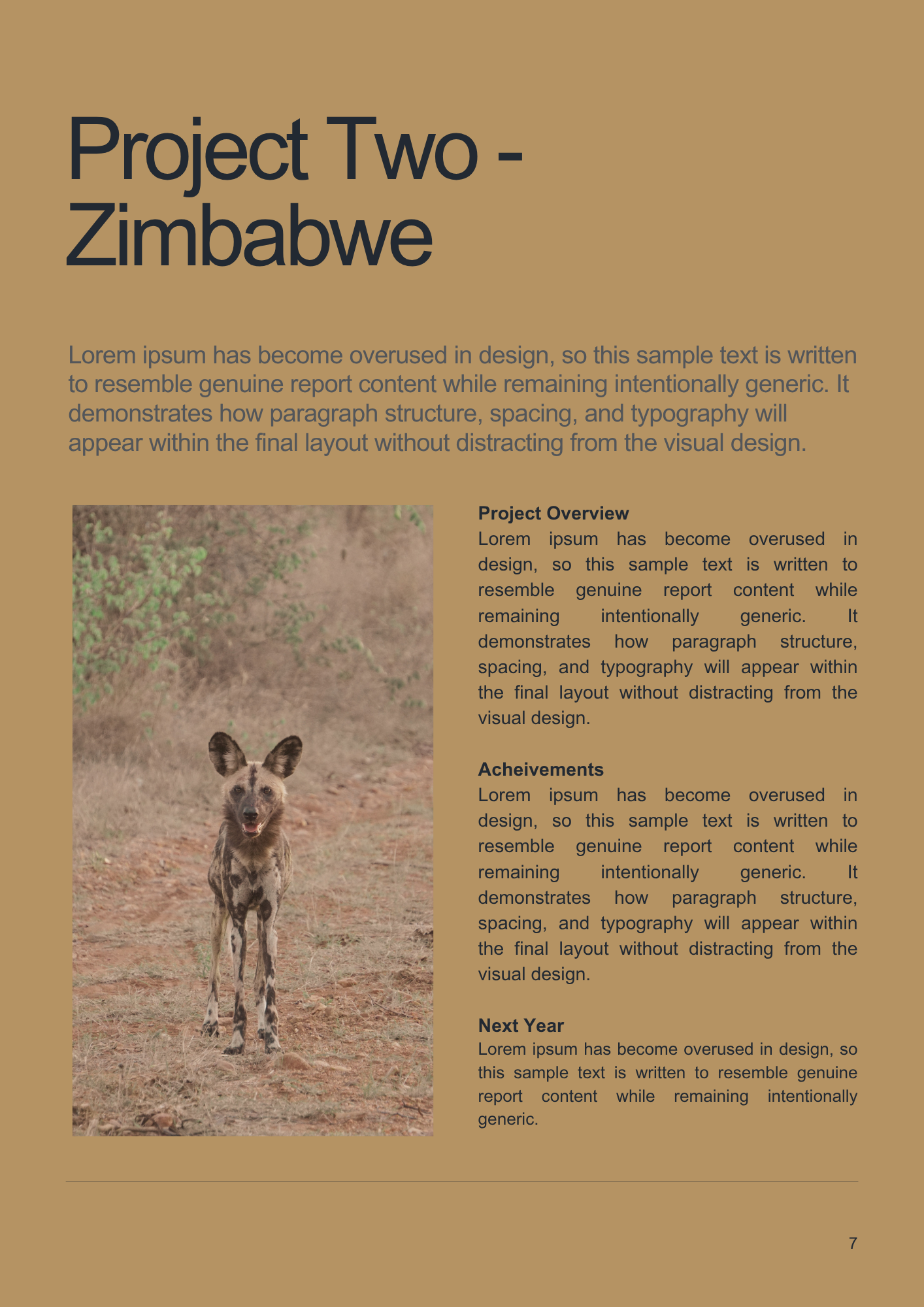
A professionally designed annual report is more than a financial requirement, it is one of an organisation's most valuable communication tools. By combining financial transparency with compelling storytelling, photography, impact statistics and program highlights, the report can demonstrate accountability while showcasing the real-world outcomes made possible through donor support. A visually engaging report also becomes a versatile asset that can be shared with donors, grant providers, partners and the wider community throughout the year. Below is an example of what a 2026 Annual Report could look like.
Expected Outcomes
Increased transparency and organisational credibility.
Stronger donor confidence through clear impact reporting.
A professional resource for grant applications, partnerships and stakeholder engagement.
A reusable marketing asset that showcases the organisation's achievements in a reporting year.
2. LinkedIn Profile
LinkedIn provides an opportunity to establish professional credibility and connect with a broader network of organisations, funders, and industry leaders. A dedicated organisational presence allows the NGO to share conservation achievements, research, partnerships, and updates in a professional environment, strengthening trust and visibility within key funding and collaboration networks. This supports the development of new relationships, increases exposure to potential donors and sponsors, and positions the organisation more strongly within the conservation sector.
3. Media Outreach
A proactive media outreach strategy would position conservation achievements, research findings and community initiatives as compelling stories for local, national and industry media. By identifying newsworthy opportunities throughout the year and developing targeted media releases and story pitches, the organisation can significantly increase public awareness of its work. Regular media engagement strengthens organisational credibility through third-party recognition while expanding visibility to new audiences, supporters, funding bodies and potential partners.
4. Website Refresh
The website should function as the central hub of the organisation’s communications. A structured content review and visual refresh would improve navigation, modernise the design, and ensure information is clear, current, and accessible. Enhancing user experience, SEO, and content structure makes it easier for visitors to understand the organisation’s mission, explore its programs, and take meaningful action such as donating, becoming involved, or making contact. This strengthens visibility, increases engagement, and improves conversion from visitors to active supporters.
5. Social Media Strategy
A strategic social media plan would create a consistent and engaging digital presence while improving the efficiency of content creation. By incorporating scheduled field visits to capture photography and video in bulk, content can be planned and distributed throughout the year while maintaining authentic conservation storytelling. Encouraging user-generated content from volunteers, researchers and partner organisations further broadens audience reach and showcases the organisation's work through diverse perspectives. This approach strengthens community engagement, improves brand consistency, and builds a sustainable pipeline of high-quality content.
6. Quarterly Newsletter
A quarterly newsletter creates a consistent communication channel that keeps supporters engaged throughout the year. Rather than communicating only during funding cycles, regular updates can share conservation milestones, field stories, research progress, and volunteer experiences, reinforcing transparency and demonstrating ongoing impact. This approach strengthens donor relationships, improves retention, increases awareness of project outcomes, and builds a stronger sense of community and long-term supporter engagement.
7. Partnerships & Awareness Campaigns
Strategic partnerships and awareness campaigns provide an opportunity to expand the organisation's reach by collaborating with businesses, conservation organisations, educational institutions and community groups that share similar values. Joint campaigns can amplify conservation messaging, increase public engagement and introduce the organisation to new audiences through shared networks. By building meaningful relationships beyond traditional fundraising, these initiatives create opportunities for long-term collaborations, sponsorship, advocacy and sustainable support for conservation programs.
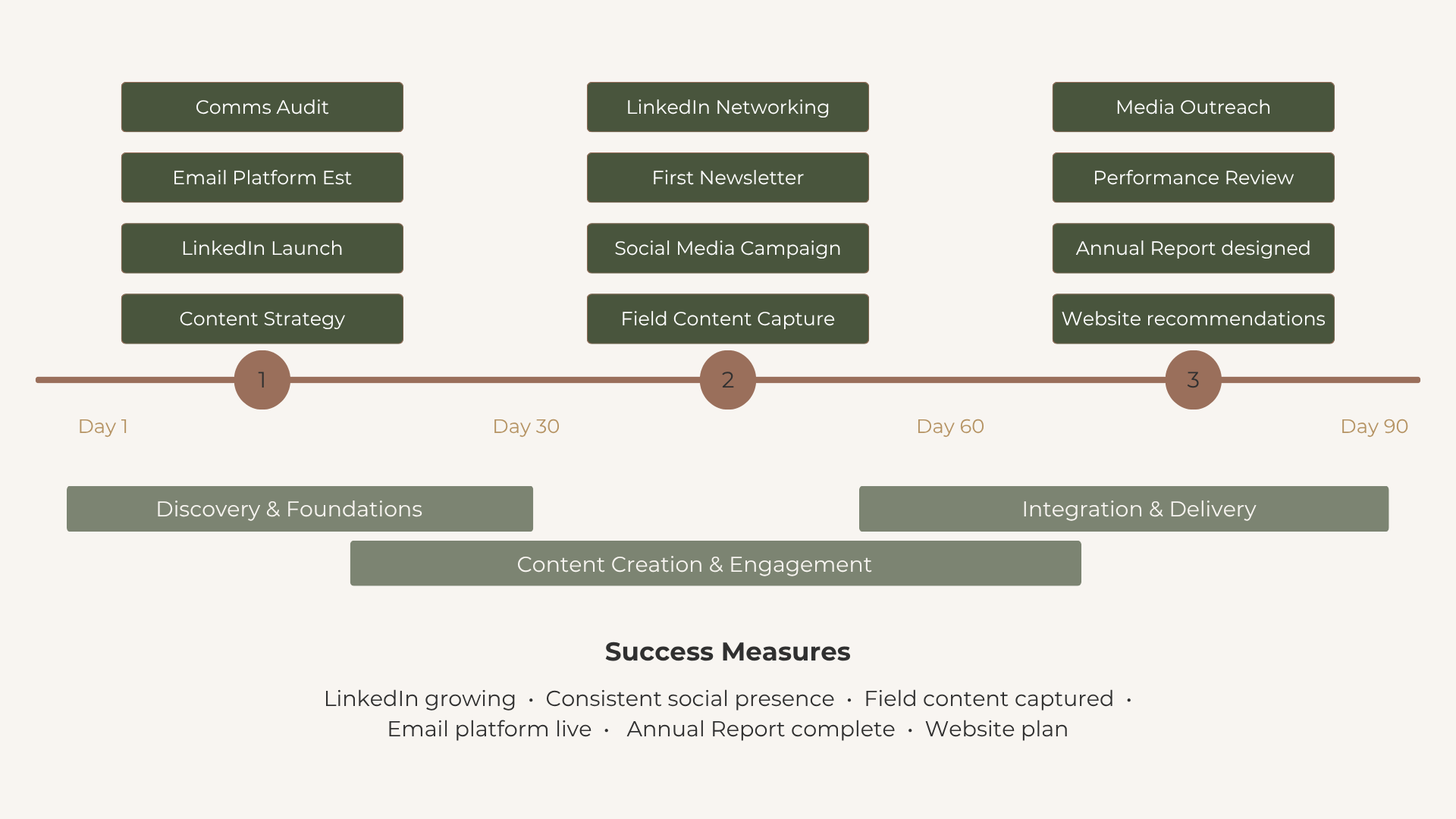
Phase One:
90 Day
Communications
Revitalisation Plan
Phase Two:
Ongoing Communications
& Growth
The first 90 days establish the foundations for a professional and sustainable communications strategy.
Phase Two focuses on maintaining momentum through ongoing content creation, stakeholder engagement, website management, quarterly newsletters, media relations and strategic campaigns that continue to build the organisation's visibility and credibility over time.
Why I’m
the person
for the job
With experience across wildlife conservation, field operations, and strategic communications, I bring a unique understanding of both the stories behind conservation and the audiences they need to reach.
My background allows me to communicate complex conservation initiatives in an authentic and engaging way while developing professional communications that support fundraising, partnerships, and long-term organisational growth. I am based in both Australia and South Africa and available to travel to other countries as required to capture field content and support on-the-ground engagement.
By combining time in the field with communications expertise, I can create content that is both scientifically credible and compelling for donors, supporters, and the broader public.